I think randomized divination types are the ones we think of most often, at least with modern-day fortune telling. Randomized means that a human initiated the action being “interpreted” through some tool, but the output of said action is unpredictable. Here are some examples:

Aleuromancy
Where: Mesopotamia and the Near East
What: Slips of paper with words of warning are baked inside cakes or cookies, then distributed to those wishing their fortunes to be told. The Greeks would bake slips of paper with sentences on them inside balls of flour, which were mixed 9 times.
When: Divination with flour is referenced in cuneiform tablets from 2000 BCE.
Fun Fact: Does this sound familiar? Modern-day fortune cookies are aleuromancy.


Bibliomancy
Where: Various locations, including Europe, Persia, and India
What: Choosing a random passage from a written text and interpreting it as an answer to your question.
Examples include using Virgil’s Aeneid (Middle Ages Europe), The Divān of Hafez (Iran), Falnama (Iran, Turkey, India), and The Gospel of the Lots of Mary (early Christian divination). Oh yes, my Christian friends, your religion also practiced soothsaying.
When: The Gospel of the Lots of Mary dates from about 500 CE, though it’s likely it was practiced earlier with other texts.
Fun Fact: My favorite college professor practiced bibliomancy with books of poetry on rainy days. Not that he called it that…but that’s what it was. I’m a fan of using my beloved Emily Dickinson Poems book for this.

Burnt Bones
Where: China and Japan
What: Also known as futomani (in Japan), an interpreter cracks animal bones using heat, then interprets those cracks. Typically, an inscription is then made on the bone, recording what might (or did) happen, the date (a 60-day cycle), and who did the divining.
Chinese bone burning was most common during the Shang Dynasty, which started around 1600 BCE. As you can imagine, it was a hell of an art form.
When: In China, the earliest surviving records date to 4000 BCE. In Japan, archaeological evidence suggests it originated as early as the Jōmon period (14,000 to 300 BCE).
Fun Fact: Oracle bone inscriptions are the earliest written records we have from ancient China. That means we know exactly which issues Bronze Age Chinese folks were concerned with. And they’re exactly what you and I are most concerned with today. OK, not AI and climate change, but the usual stuff: health, wealth, family.

Capnomancy
Where: Babylonia, Malaysia
What: Interpreting omens from looking at the movements of the smoke after a fire has been made (or incense has been lit, with libanomancy).
When: It’s referenced in a document from 2000 BCE (in Mesopotamia).
Fun Fact: A thin, straight plume of smoke is good. Large plumes of smoke are bad. If the smoke touches the ground, immediate action must be taken to avoid a catastrophe.

Carromancy
Where: Ancient Russia and the British Isles
What: Divining the future through the shape of melting wax. Most commonly, you heat wax until molten, then pour it directly into cold water. The shapes and movements of the wax as it cools and solidifies forecast the future.
When: A scrap of paper from 500 BCE indicates this method was used during a druid’s vigil; the rest we know primarily from folklore.
Fun Fact: Similar to tasseography, meaning appears to be connected to the literal shapes formed by the wax. That makes it pretty approachable for anyone! It was also commonly done in Russia at the end of the year, as so many divination rituals “of the people” seem to be.

Cartomancy
Where: Europe, primarily
What: A reader interprets the meaning of cards drawn from a specific deck to predict a future endeavor. This includes the position of the cards relative to each other, the placement of each within a pattern, and their relationship to the querent. The most famous, of course, is the tarot.
When: Tarot has been practiced since about 1600 CE, though it started as a competitive card game (stay tuned for more about that).
Fun Fact: Most of the symbolism we associate with specific tarot cards today comes from the Rider-Waite-Smith deck of 1910. I’ve got a whole slew of posts coming in September about the history of tarot. Those include images of the surviving original tarot cards, some of which are very different from our decks today.

Casting Lots
Where: Most civilizations around the globe
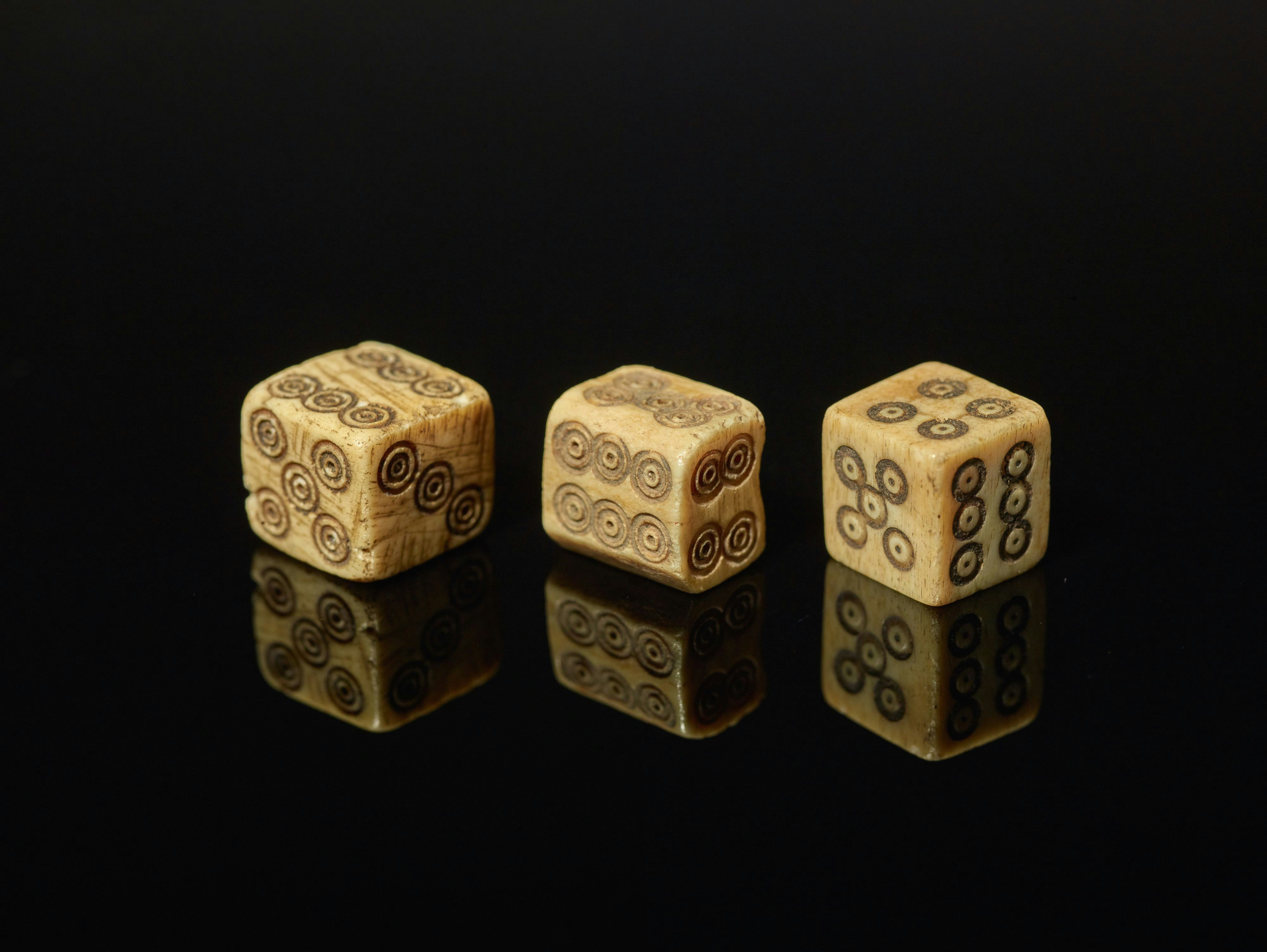
What: Also known as sortition or kleromancy, this is throwing pre-marked objects into an area and interpreting the message from which images land, where they land, and how they orient to one another. There’s a pre-established meaning to each aspect, but the throwing/casting is random.
It also includes:
- Astragalomancy (Greeks carved the astragalus/knuckle bones of various animals)
- Favomancy (using beans)
- I Ching
- Acutomancy (Romani drop 7 to 20 needles in a shallow bowl of water)
- Sortilege (dice)
- Aichmomancy (like spin the bottle, but using a spearhead in sand)
- Runes
- Jiaobei/Poe
- Abacomancy (aka Amathomancy, where Greeks pour out sand, dust, or ashes of the dead on a smooth surface to find patterns)
- Ifa (small objects tossed around on a shaking tray, practiced by the Yoruba)
- Lithomancy (reading stones or the light through crystals)
- Alomancy, aka adromancy, ydromancie, idromancie, and halomancy (throwing salt in the air)
With Ifa, diviners have to memorize 256 poems as part of their training. And you thought the SATs were tough!
When: 500 BCE (Ancient Greece) is the oldest surviving record we have of astragalomancy. Ifa has been practiced since at least 100 CE and is still used today.
Fun Fact: The lot oracle at Kremna (in modern-day Turkey, dating from about 120 CE) is a small limestone monument (8′ tall), dedicated to the god Mercury. Inscribed on its side were 56 possible outcomes that the knucklebone thrower would consult to find the answer to questions about the future. There were over 20 stone lot oracles like this in Asia Minor.

Haruspicy
Where: Babylonia
What: A petitioner consulted a haruspex (or Baru) with a yes/no question. The haruspex sacrificed a sheep or chicken and “read” its entrails (usually the liver) to determine the Sun God’s answer.
When: At least 2000 BCE, and it’s still practiced today (especially in south Ethiopia and south Sudan). A surviving training manual (Bārûtu, “The Art of the Diviner”) was created on clay tablets around 600 BCE, though evidence indicates training documents were produced far earlier.
Fun Fact: Certain structures in the entrails were positive, while others were negative. The haruspex would tally each to determine whether the answer was yes or no. But they also conducted a second sacrifice to confirm their reading…making them early followers of the scientific method!
And here’s another: If something unusual happened, like the unexpected death of a king, they would read the entrails that day and note any mutations they observed. They began writing these down as “theoretical haruspicy” to correlate future observation of these mutations with events. In this way, it acknowledged that there’s always more humans can learn.

Pyromancy
Where: Mesopotamia, Eurasia
What: Set a fire, observe the shapes the flames make, and interpret those meanings.
When: Its first directly recorded instance was the 1300s, but references exist in ancient Greece, and it’s safe to say, given humanity’s relationship with fire, it’s been around a long, long time.
Fun Fact: A scholar in the 1400s alleged that virgins at the Temple of Athena in Athens practiced pyromancy. Since it was considered in Medieval times to be one of the “forbidden arts,” I’m not sure if that assertion was based on evidence or titillation.

Statue Oracles
Where: Egypt and Greece (agalmatomancy)
What: Consulting the statue of any god and receiving a yes/no answer. In Egypt, that comes via the statue’s head movement. But Bix, you say, statues don’t move. That’s why they’re statues.
To which I say, you’re correct, but this practice included asking the statue as it floated down the Nile in a boat. The water movement determined a “nod” from the statue. It also included the statue being carried around the streets on a litter by priests, in which case walking forward was a yes, and backward was a no.
Interestingly, one could submit inscribed questions directly to the priests, which is less randomized and more human manipulation. It’s unclear whether the statues had moving parts that the priests could manipulate to make them nod. Wouldn’t that be freaky, though?
When: 1069 BCE is when the practice seems to have become common.
Fun Fact: It wasn’t just the gods those Egyptians petitioned for answers. There’s evidence they consulted deified pharaohs at times, using the same technique. It’s good to be king!

Tasseography
Where: Turkey and the Balkans
What: The querent drinks loose-leaf tea or Turkish coffee from one side of the cup. When only the grounds are left, they invert the cup onto a saucer and turn it 3 times while asking their question or making a wish. An expert divines meaning from the shapes of the sediment, their position on the cup, and their position relative to other chunks.
This is still done today, and builds social bonds by encouraging a 2-hour-long evening coffee break to unwind and chat. The reader isn’t supposed to give solely good or solely bad news, to avoid making the querent too happy or too sad.
I think we need to make this a thing here in the States.
When: Tasseography with Turkish coffee dates to about 1500 CE.
Fun Fact: This is also done with wine. I, for one, would prefer to be a little tipsy when the future is revealed, so this sounds like a great idea to me.
I also love that, as with cartomancy, tasseography takes into account the querent’s past and present circumstances, because that influences their interpretation of future events. It’s psychology, sociology, and divination in one tasty beverage!







Leave a Reply