When it comes to what we know about tarot and its use as a future-telling device, it began with a lie.
But first, context.
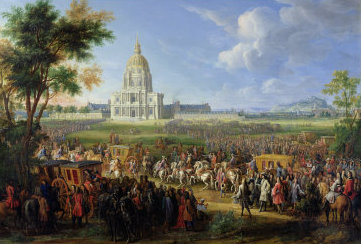
The 1770s were a time of extreme wealth inequality in France. The class system was well in place, and it seems the true coin of the day was one’s ability to be deliberately entertaining or original.
Rich or less-rich, one had to garner favor to gather business. Social capital was necessary. Having (and keeping) clout was important enough that we can perhaps excuse Jean-Baptiste Alliette.
You see, Alliette was a seed merchant, the child of a seed merchant and a caterer.
Paris at that time was about 600,000 people strong, but economic crises (thanks to some very expensive wars) and poor harvests were causing food scarcity and rising taxes. Farmers were reluctant to take the risk of trying new crops. And as a merchant (the “Third Estate” class), Alliette was subject to heavy taxes and restrictions.
We can safely assume that he was not in a financially good situation.
So, he switched to writing, and published Etteilla, ou maniere de se récréer avec un jeu de cartes (“Etteilla, or way to recreate yourself with a deck of cards”).

In it, he talks about how to use piquet cards (plus a new Eteilla card) in a spread to divine the future. He assigns meanings to each card, both upright and reversed, and relies on symbolism in the cards to convey meaning.
His book was wildly popular. Piquet was a popular trick-taking card game in France, similar to tarocchi (but with fewer cards), so it was something the wealthy could latch onto for amusement at home and, more importantly, at parties.
Naturally, two other dudes chimed in with a book published in 1781 that furthered the notion (Le Monde primitif). The Comte de Mellet, Louis-Raphaël-Lucrèce de Fayolle, was a popular occultist, and Antoine Court (who named himself Court de Gébelin) was a Protestant clergyman. Together, they said this style of cartomancy was Egyptian, and tarot cards were from the Book of Thoth. Court also said the 22 Major Arcana cards correspond to the Hebrew alphabet.
There is, by the way, no evidence whatsoever to support these claims. They were playing on the current popularity of ancient Egyptian mythology and history.
History is rife with people romanticizing ancient cultures and selling the idea that past mystics were more connected to the divine than current society is. *ahem*
Anyway, tarot historians think de Mellet based his argument on the fact that the Besançon Tarot deck (from Germany in the early 1700s) uses imagery of Greco-Roman gods, rather than the Catholic-based imagery of the Visconti-Sforza decks.
But this was pop culture; they didn’t need proof to support their wild ideas.

Not to be outdone, Alliette published a second book, Manière de se récréer avec le jeu de cartes nommées tarots (“Way to recreate yourself with the deck of cards called tarots”), where he said some Italian dude taught him the art of using tarot for fortune telling, way back in 1751.
At this point, he was making a pretty good living as France’s foremost astrologer, dream interpreter, numerology expert, and psychic.
He charged 3 livres for a brief reading (about $90 USD today), and extant documents show he sold amulets of protection for 15 louis (roughly $6,000 USD).
For context, a skilled laborer in 1783 Paris made 1–2 livres/day ($30–$60 USD) when there was work to be had, which wasn’t consistent. Working-class folks spent 50%–80% of their daily income on food alone (thanks to the scarcity-driven high prices). Dude was making bank.
Alliette went on to form Société des Interprètes du Livre de Thot (a group of tarot nerds). Then he published a special tarot deck that aligned with older French forms of cartomancy–the world’s first commercial tarot deck. Here’s the Death card:

He founded the Nouvelle Ecole de Magie (“New School of Magic”) and published Cours théorique et pratique du Livre du Thot (“Theoretical and practical discourse of the Book of Thoth”), which included the correspondence of tarot cards with the elements and astrology.
And thus, our modern concept of tarot was born…from absolute hooey.
Did these three Frenchmen genuinely believe in what they were arguing, or were they taking advantage of a time of enormous societal upheaval and the existing fascination with the occult and ancient Egypt? Was it just a chance to establish themselves as experts and thus price-gouge the wealthy?
We’ll never know. But it clearly tapped into something in our collective subconscious, because tarot’s been used for divination ever since.








Leave a Reply