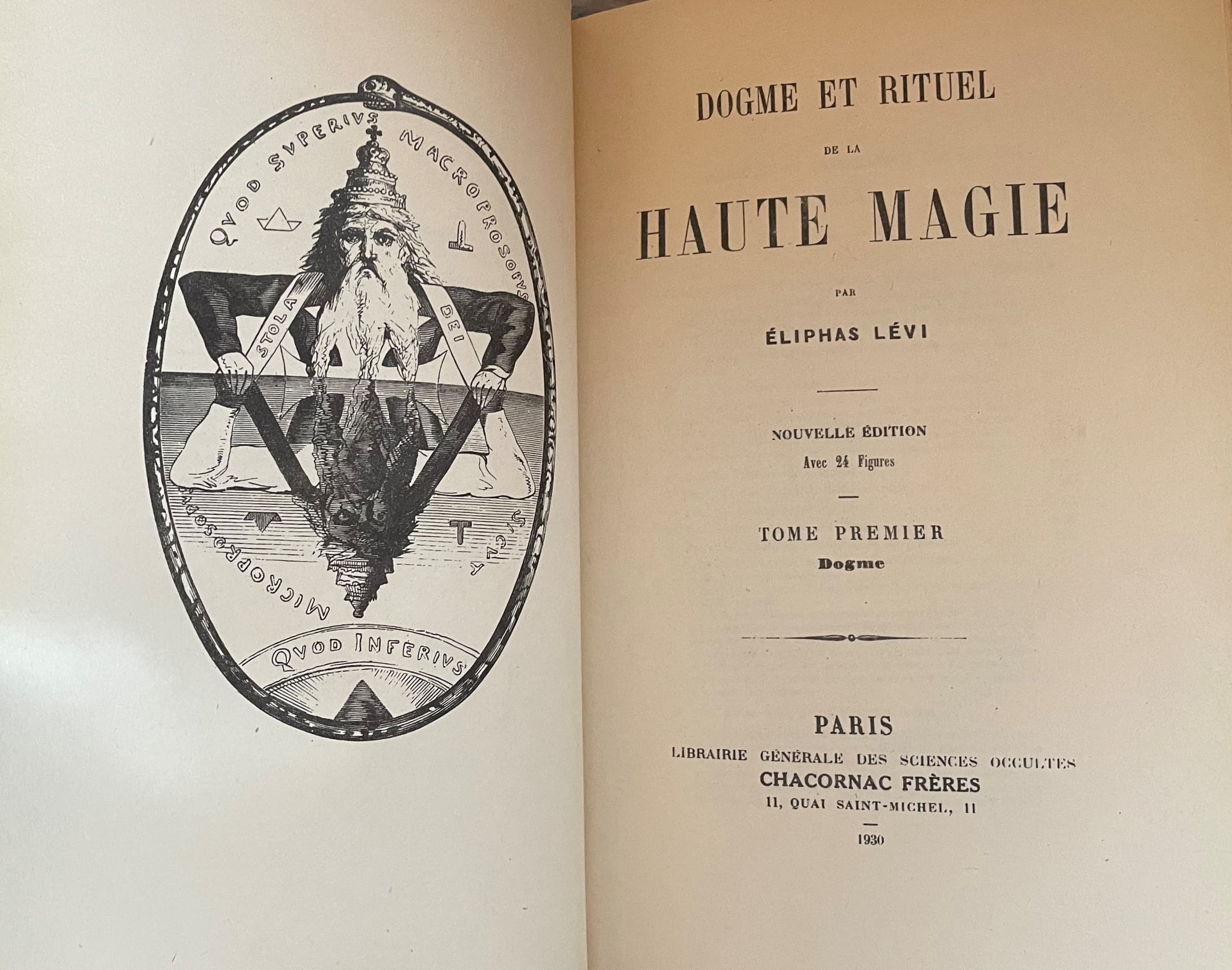
So it started as a betting game, and then it started gaining traction as a fortune-telling party trick. But it wasn’t until French occultist Eliphas Levi (aka Alphonse Louis Constant) published his book Dogma et Rituel de la haute magie, in 1861, that tarot became known as a serious tool for divination.
Levi introduced the terms Major Arcana and Minor Arcana. He (along with several other publishers and cardmakers at this time) started weaving in symbolism from different religions and existing occult practices, like numerology. This amalgam gave rise to the Rider-Waite-Smith deck of 1910, on which the majority of our modern cards are modeled.

Arthur Edward Waite translated Levi’s text in 1886 and was part of the formation of the Hermetic Order of the Golden Dawn two years afterward. It sounds pretentious, I know. But it was a social club for the study of esoteric practices, including divination and ritual magic. Pamela Coleman Smith was also in the order (as were W.B. Yeats, Aleister Crowley, and others).

Waite commissioned Smith to create a deck. He gave her precise instructions for the Major Arcana, but let her design the Minor Arcana however she wanted. Up to that point, the “pip cards” didn’t have their own images. They were similar to our modern Bicycle playing cards. Smith really let loose and filled each Minor Arcana card with images representing the meaning of each card, plus more occult symbols. Her designs essentially enabled tarot to be read intuitively, which gave rise to its continued popularity over the past 116 years.
Rider and Company published this deck, and they were known as the Rider-Waite deck for nearly a century. Finally, though, the inclusion of Smith became standard, and the artist got recognition posthumously.

We can imagine that, for the Hermetic Order of the Golden Dawn and other occult groups practicing during WWI and WWII, the concept of knowing the future during such turbulent, dangerous times was a strong driver.
Around 1938, occultist Aleister Crowley commissioned Lady Frieda Harris to paint his version of the tarot, called the Thoth Tarot. It was not only an update on the classic tarot imagery, it pulled in concepts from science, philosophy, and Hebrew occultism. It also added and renamed some of the existing Major Arcana cards.

The Thoth Deck wasn’t widely published until 1969, so the imagery of it is relatively new. However, it set the inspiration for the boom of custom tarot deck designs that rose in the 1990s and continue today.





Leave a Reply