
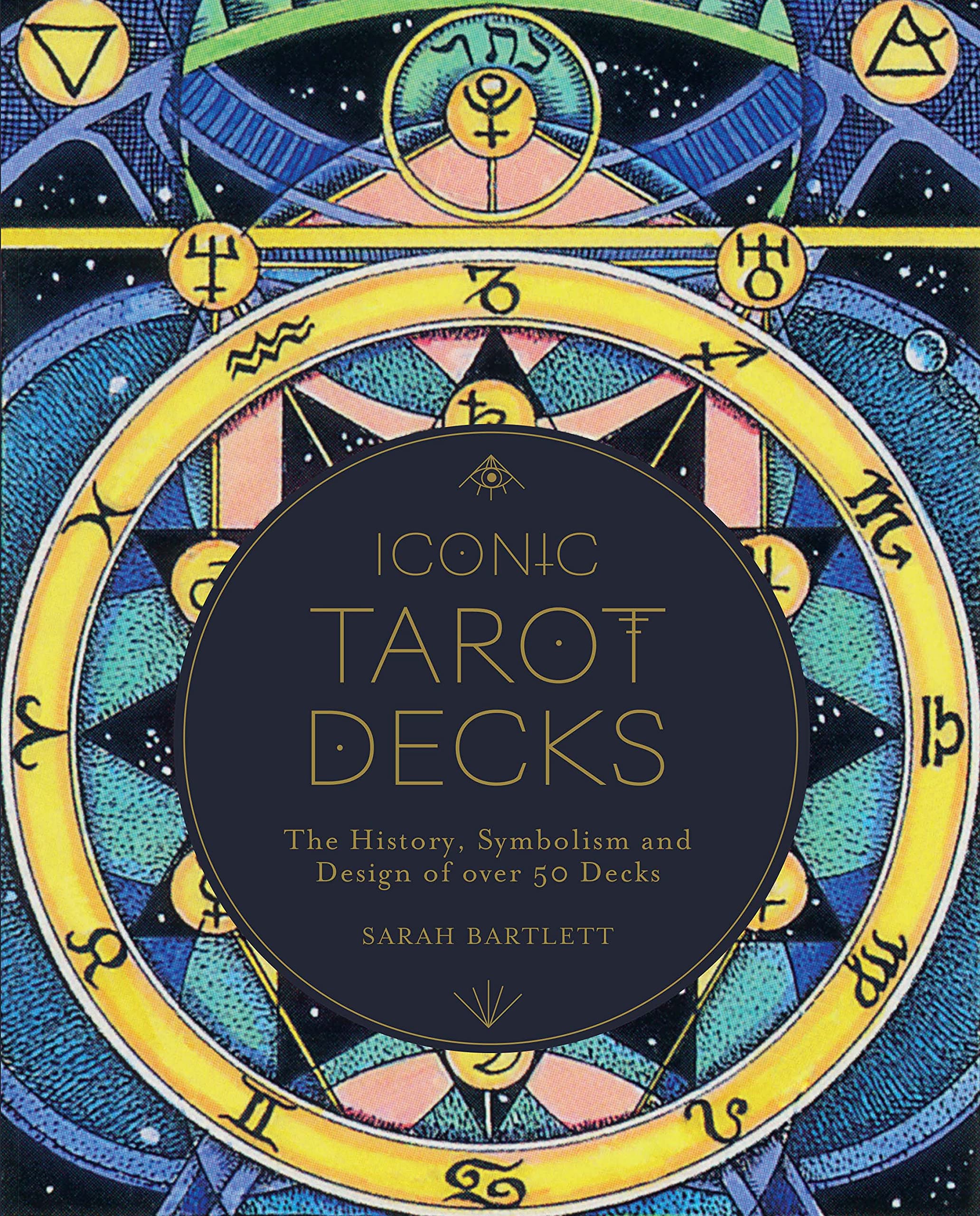
Title: Iconic Tarot Decks: the History, Symbolism and Design of over 50 Decks
Author: Sarah Bartlett
Genre: Nonfiction
Publication Year: 2021
Synopsis
The tarot is a treasury of divination, symbolism and self-knowledge. But who created its mysterious art and meaning, and why? What were they seeking? Does it originate in ancient esoteric wisdom or is this a vain fancy of the occultists? How has the interpretation and meaning of the cards evolved?
In Iconic Tarot Decks, Sarah Bartlett (the international bestselling author) presents 50 of the most iconic tarot decks – telling the powerful stories of how each was devised and designed and showcasing their most exemplary cards. Each of the fifty-six decks in this book holds its own unique symbolism and mysticism from Visconti-Sforza, the fifteenth-century deck that reveals the fates of two Italian dynasties, to the Sola Busca Tarot, with its esoteric alchemical codex; from the pioneering Rider-Waite-Smith deck to the occult riddles of English Magic Tarot.
With an introduction to reading tarot and useful tips on deciphering the cards, this is the perfect book for collectors, cartomancers, designers, tattoo artists, and anyone interested in the art and mystery of tarot.

My Thoughts
This is the first tarot book I’ve read that compares the artwork and symbolism of different decks, and there’s aesthetic value in that. I do wish she’d consistently explained the significance of each deck she chose.
The art majors among us will appreciate that she dives into which artist or style a deck mimics, in addition to showing a few images of cards from the deck. But I wanted to better understand why she chose the decks she did for inclusion in this book.
It also goes through a light history of tarot decks. I say light because, while the author clearly did research, she frames historical facts within open-ended questions (like “Could this have been x?”), intended to pull the reader into the land of what-if. I get the purpose, but I personally found it annoying and disruptive.
I also didn’t love that the three major eras of tarot are presented piecemeal, rather than chronologically. I wanted to understand the through-lines between the Hermetic movement interpretation and the Humanists, or what led to the focus on psychotherapy through tarot in the 50’s and 60’s. Alas.
That said, it was pretty and inspired me to dig further into extant decks and things like the switch from Catholic imagery to Greco-Roman imagery.







Leave a Reply